The Complete Guide to Bagni di Lucca: What to See, Do and Experience
15 min
What Is Bagni di Lucca?
There is a particular kind of silence in northern Tuscany. Not the silence of emptiness, but the silence of a place that has learned, over centuries, to hold its stories quietly. Bagni di Lucca is one of those places.
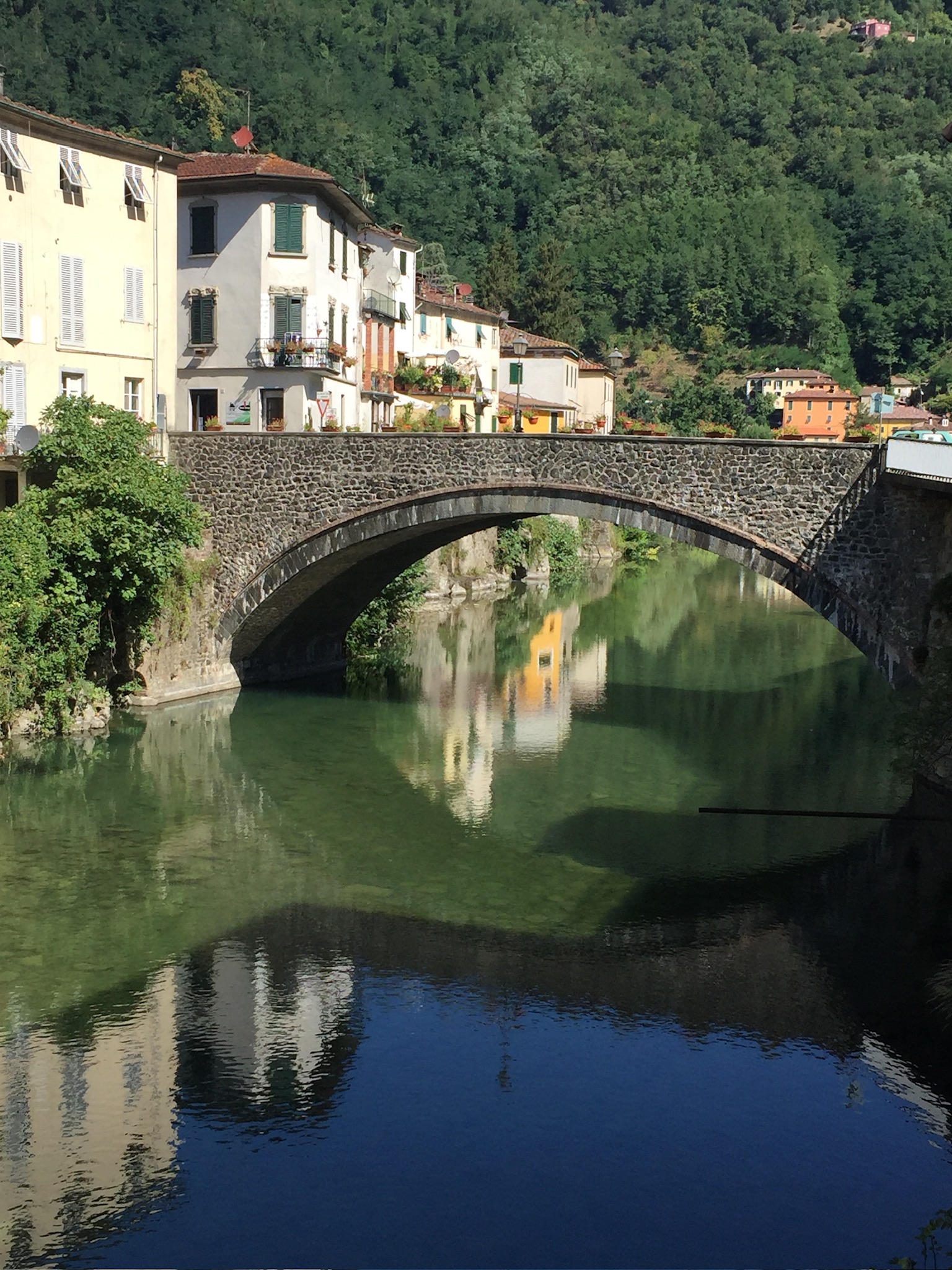
Nestled in the emerald folds of the Val di Lima, just 30 kilometres north of Lucca and less than two hours from Florence, this small commune sits where the Lima River curves beneath ancient stone bridges and chestnut forests descend from the Apennines above. It is the kind of destination that does not announce itself. There are no tour buses idling in the piazza, no long queues at the door of a famous attraction. What it offers instead is rarer: the sense of arriving somewhere still intact, still itself.
At its heart, Bagni di Lucca is a thermal spa town — one of the oldest and most distinguished in Europe. But it is also a gateway to some of the most beautiful and least-visited landscapes in all of Tuscany: limestone gorges, medieval hilltop villages, mountain trails that unwind into silence, and a river cold and clear enough to swim in on a summer afternoon.
For those looking to trade the crowds of Florence for something slower, more contemplative, more genuinely Italian — Bagni di Lucca rewards every detour.
A Brief History: Europe's Most Fashionable Cure
Few places in Italy carry quite the weight of history that Bagni di Lucca does — or wear it quite so lightly.
The thermal springs here have been known since at least the medieval period, when the Countess Matilde di Canossa had the baths restored and the water's healing properties formalized. But it was in the 19th century that Bagni di Lucca had its great moment: it became one of the most fashionable resort destinations on the European continent, drawing royalty, artists, politicians and intellectuals to its hillside villas and warm mineral waters.
Napoleon's sister, Elisa Baciocchi, made it her summer residence when she reigned over Lucca. The Romantic poets followed: Byron, Shelley and the Brownings all stayed here, writing and corresponding from the cool shade of the valley. Paganini performed. Liszt played in the Casino. Puccini was a regular visitor — it is said he completed Turandot in Bagni di Lucca. Dumas, Lamartine, Montaigne and Montale all passed through, each finding in this valley something the great cities could not offer: air, water, and the particular lucidity that comes from distance.
The Casino itself — the Casinò Regio, built in 1837 — holds the distinction of being the first purpose-built casino in Europe. Roulette, that most European of games, made its continental debut here. The building still stands in Ponte a Serraglio, its yellow façade and white columns reflected in the Lima below, now hosting exhibitions and cultural events rather than card tables.
That golden era faded in the late 19th century as fashions shifted and the great spas of the Alps drew the aristocracy northward. What remains today is something more precious than fame: a town that time has treated gently, its 19th-century architecture still intact, its hot springs still flowing, its rhythms still unhurried.
Getting to Bagni di Lucca
Bagni di Lucca sits at a natural crossroads, making it an ideal base for exploring the wider region of northern Tuscany.
By car is by far the most rewarding approach. From Lucca, the SS12 winds northward through the Serchio Valley and then turns into the Val di Lima — a drive of around 35 minutes that becomes increasingly beautiful as the valley narrows and the mountains close in. From Florence, allow approximately 1 hour 30 minutes. From Pisa, around 1 hour 15 minutes.
By train, the closest mainline station is Lucca, served by regular trains from Florence, Pisa and Milan. From Lucca, local buses and taxis connect to Bagni di Lucca. A regional bus (CAT) runs the Lucca–Bagni di Lucca route several times daily, a journey of approximately 50 minutes.
By plane, Pisa Galileo Galilei Airport is the closest international gateway, approximately 75 kilometres south. Florence Peretola Airport offers an alternative for those flying from elsewhere in Europe.
A car remains strongly recommended for exploring the surrounding villages and trails, which are the true reason to linger here.
What to See in Bagni di Lucca
The Thermal Baths of Bagni Caldi
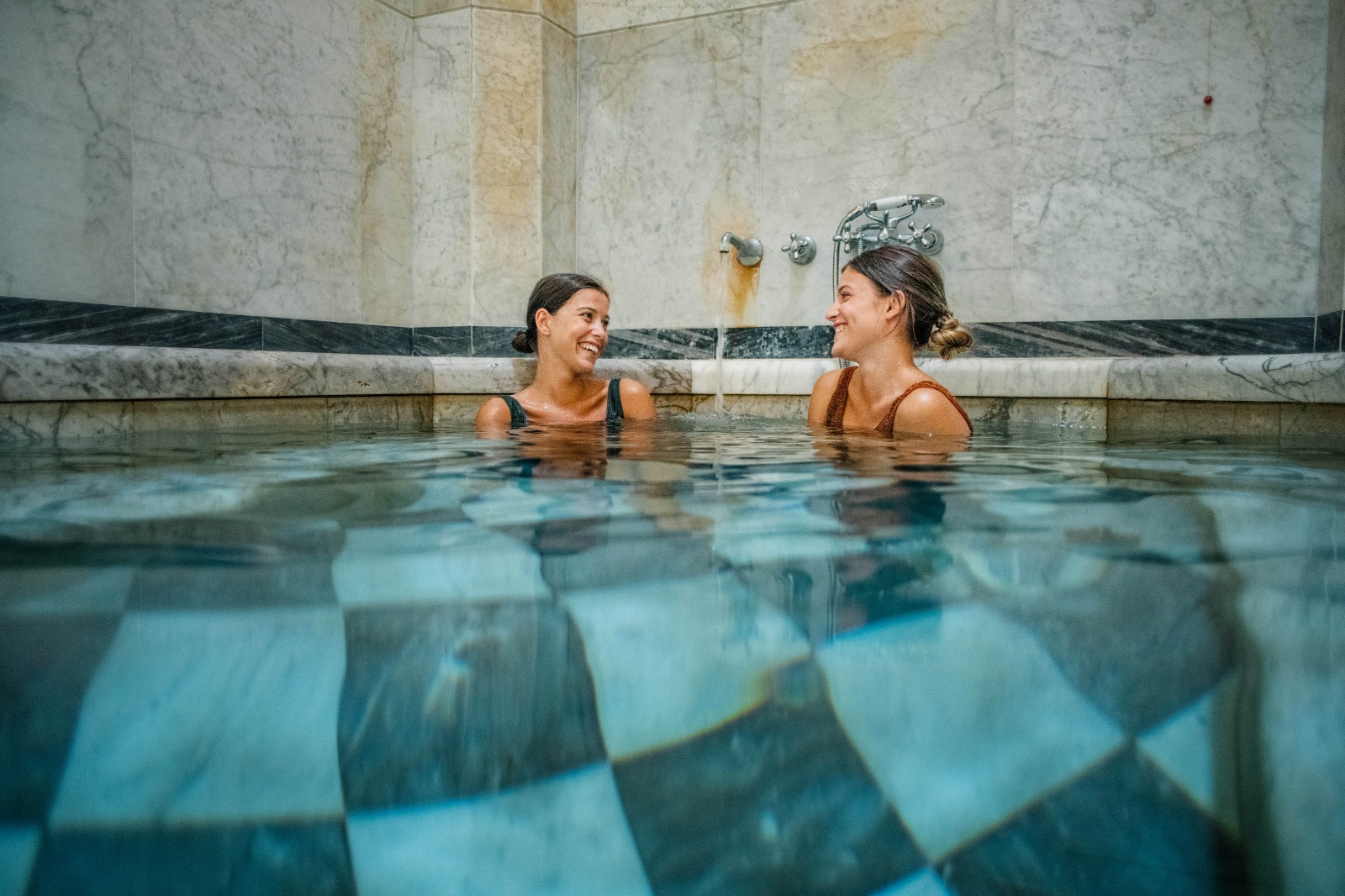
The town's original reason for being, and still its most evocative experience. The Terme Bernabò establishment on Via Bagni Caldi offers the most atmospheric immersion in Bagni di Lucca's spa heritage: individual 19th-century marble tubs, a natural steam grotto, and mineral water emerging from the hillside at over 40°C. The water is naturally rich in calcium and sodium-bicarbonate — the same waters that attracted Napoleon's court and the Romantic poets.
Two natural steam caves survive at Bagno Caldo: the Grotta Grande and the smaller Grotta Paolina, named in honour of Pauline Bonaparte, who was among its most devoted regulars. Bathing here is less a tourist activity than an act of historical participation.
The Casinò Regio and Ponte a Serraglio
The village of Ponte a Serraglio is the most elegant part of the commune, its 19th-century architecture clustered along the riverbank in a manner that has changed remarkably little since the days of Byron. The Casinò Regio — Europe's first purpose-built casino — anchors the central piazza with its distinctive colonial facade of yellow walls, white columns and green shutters. It is worth pausing here at dusk, when the last light catches the building from across the Lima.
The English Church and Protestant Cemetery
A marker of just how international Bagni di Lucca once was: the Anglican Church of All Saints, built in 1839 in the Neo-Gothic style, served the substantial British colony that had settled in the valley following the Romantic poets. The small Protestant cemetery nearby, recently restored, is one of the most quietly affecting places in the entire commune — a reminder of the extraordinary cosmopolitan world that once converged on these Tuscan hills.
The Ponte delle Catene
One of the oldest surviving iron suspension bridges in Italy, the Ponte delle Catene was designed by the Lucchese engineer Lorenzo Nottolini in the 19th century and spans the Lima River with elegant precision. Its reflection in the green water below makes it one of the most photographed spots in the valley — deservedly so.
The Village of Bagni di Lucca Town
The town itself rewards unhurried exploration on foot. The older section along the riverbank holds the greatest concentration of 19th-century villas, crumbling garden walls and quiet alleys that open unexpectedly onto river views. The Contessa Casalini Park offers a shaded space for a Tuscan picnic — farinata flatbread, local pecorino, a bottle of Colline Lucchesi wine.
What to Do: Activities and Experiences
Hiking the Apennine Trails
The hills above Bagni di Lucca constitute some of the most rewarding walking terrain in northern Tuscany. Marked trails thread through chestnut and oak forests, past abandoned mills and stone hamlets, up to open ridges with views that extend, on clear days, as far as the Ligurian coast. Monte Prato Fiorito — the "flowering meadow mountain" — is one of the most celebrated walks in the area, particularly in late spring when the high meadows are in bloom.
For those seeking a more challenging route, the paths toward the Tuscan-Emilian Apennines ridge reward the effort with a sense of genuine remoteness: just the sound of wind, and the line of mountains curving away in both directions.
Whitewater Activities on the Lima River
In the warmer months, the Lima River becomes the focal point for a different kind of adventure. The river's rapids and gorges attract kayakers and rafters from across northern Tuscany, and several operators based in the valley offer guided half-day and full-day experiences on the water. Rafting H2O is one of the established activity centres on the Lima, offering family-friendly excursions alongside more technical routes.
For those with more time, Canyon Park in the nearby village of Cocciglia combines zip-lining, rope bridges and via ferrata in a forested setting above the valley — an excellent option for families with older children.
Swimming in the Lima
Perhaps the most quietly pleasurable activity available in summer: simply swimming in the Lima. The river runs cold and clear from the Apennines, and there are several natural pools and rocky banks where locals and visitors have been cooling off for generations. On a hot August afternoon, there are few things more restorative.
Day Trips to Lucca, Florence and Pisa
Bagni di Lucca's position makes it an ideal base for day trips to Tuscany's great historic cities — without the cost and crowds of staying in them. Lucca, with its perfectly preserved medieval walls and aristocratic piazzas, is under 40 minutes by car. Florence and Pisa are each reachable in well under two hours.
The rhythm that many guests find at La Casa Quieta has a natural logic: mornings in the valley — a walk, a swim, a long breakfast on the terrace — and afternoons spent driving into the history of Tuscany, returning each evening to the quiet.
The Hidden Villages of the Val di Lima
One of the true pleasures of the Bagni di Lucca area is its scatter of medieval hilltop villages, each one seemingly untouched by the passage of time. These are places the guidebooks have largely overlooked, which is precisely what makes them worth seeking out.
Lucchio clings to its steep hillside like a mountain village from another century, the ruins of its medieval castle visible from the valley below. The approach by road is vertiginous and the village itself is tiny — but the views from the top are extraordinary.
Montefegatesi occupies one of the most dramatic positions in the entire valley: a medieval hamlet perched on a hilltop commanding views in every direction. The drive up is an adventure in itself.
San Cassiano sits in a gentler setting, surrounded by mountains and chestnut groves, with a quiet piazza and the kind of local bar where time passes differently.
Further afield, Borgo a Mozzano — just south of Bagni di Lucca on the Serchio River — is known for the extraordinary Ponte della Maddalena, also called the Devil's Bridge: a medieval stone bridge whose single great arch looms over the Serchio in a feat of engineering that still provokes wonder eight centuries after its construction. The legend holds that the bridge's architect, unable to complete it in time, made a pact with the devil — who was outwitted by the locals before he could claim his payment.
Where to Eat: A Taste of the Val di Lima
The cuisine of the Bagni di Lucca area belongs to the old peasant tradition of the Lucchesia — honest, seasonal, deeply rooted in the landscape. The specialities are those of the chestnut forest and the river: chestnut flour in the form of necci (thin pancakes rolled with ricotta), polenta served with wild boar ragù, tordelli lucchesi (handmade pasta with a meat filling unique to this province), and river trout prepared simply with olive oil and herbs.
Among the restaurants worth seeking out: Circolo Culturale in Bagni di Lucca town for unpretentious local cooking at fair prices; the small trattorie in the villages above the valley, where the menus change with the season and often with the mood of the cook.
The local wine is Colline Lucchesi — light, slightly tannic, produced in the hills between Lucca and the coast — and pairs naturally with everything on the table.
When to Visit Bagni di Lucca
Spring (April–June)
The finest season for walkers and those drawn to the valley's natural beauty. The chestnut forests are brilliantly green, the Lima runs full from snowmelt, wildflowers cover the high meadows. Temperatures are mild — ideal for long days on the trails and cool evenings in the village. Crowds are minimal.
Summer (July–August)
The warmest months bring a particular magic to the valley: swimming in the Lima, long evenings on terrace tables, the particular quality of mountain air that makes the heat bearable even at its peak. The valley is popular with Italian families in August, but remains far quieter than the coastal resorts or the Chianti hills.
Autumn (September–October)
Perhaps the most beautiful season of all. The chestnut forests turn copper and gold, the morning mists settle in the valley, the light becomes the deep amber of a Tuscan October. Mushroom season brings its own pleasures: porcini and chanterelles appear in every kitchen.
Winter (November–March)
A quieter visit, but not without its rewards. The thermal baths are at their most atmospheric in cold weather — stepping into a 40°C mineral pool when the air outside is below freezing is an experience not quickly forgotten. And Abetone, the ski resort in the Apennines above, is less than an hour's drive, making Bagni di Lucca a genuine base for a winter mountain escape.
Practical Information
Getting around: A car is essential for exploring the villages and trails. The valley road is straightforward; the mountain roads above the valley require confidence on narrow single-lane tracks.
Language: Italian is the working language of the valley. English is understood in tourist-facing businesses but less commonly in the villages. A few words of Italian go a long way.
Currency: Euro. Credit cards are accepted in most restaurants and hotels; cash remains preferred in smaller bars and village shops.
Where to stay: For those seeking a base that combines the peace of the countryside with easy access to the valley's highlights, La Casa Quieta — a carefully restored property in the hills above Bagni di Lucca — offers a considered alternative to the valley's hotels: a garden, a terrace with mountain views, and the particular quietness that gives the house its name.
Connectivity: Mobile coverage in the valley is good; it diminishes in the higher villages. Most accommodation has Wi-Fi.
Why Bagni di Lucca Deserves More Than a Day
There is a tendency, in Tuscany, to treat the great cities as the destination and everything else as the scenery. Bagni di Lucca inverts this logic. It is a place that asks for time — not the time of a tick-list tourist, but the time of someone willing to slow down enough to notice the way the light moves through the chestnut trees, or the sound the Lima makes at dusk when the valley has gone quiet.
It was once, for a brief and brilliant moment, the centre of European intellectual and social life. Today its fame has faded, and that fading is its greatest gift to those who find it. There are no crowds here, no performance of heritage, no pressure to move on. Just a valley, a river, a set of thermal springs that still flow from the same hillside they have always flowed from, and the generous, unhurried pleasures of a part of Italy that has not yet been discovered by the world.
Those who do find it tend to return. That, perhaps, is the most reliable recommendation of all.
Summary

What is Bagni di Lucca known for?
Bagni di Lucca is a historic thermal spa town in the Val di Lima valley in northern Tuscany, known for its natural hot springs, 19th-century heritage, and connections to Romantic-era poets including Byron, Shelley and the Brownings. It also hosted Europe's first purpose-built casino and was a major European resort destination in the 1800s.
How far is Bagni di Lucca from Florence?
Bagni di Lucca is approximately 90 kilometres from Florence, a drive of around 1 hour 30 minutes via the A11 motorway and SS12.
What is there to do in Bagni di Lucca?
The area offers thermal spa experiences, hiking trails in the Apennine foothills, whitewater rafting and canyoning on the Lima River, visits to medieval hilltop villages, and easy day trips to Lucca, Florence and Pisa.
When is the best time to visit Bagni di Lucca?
Spring (April–June) and autumn (September–October) offer the most rewarding conditions for outdoor activities and sightseeing, with mild temperatures and minimal crowds. Summer is ideal for river swimming; winter for thermal baths and skiing at nearby Abetone.
Is Bagni di Lucca worth visiting?
Yes — Bagni di Lucca is one of the most underrated destinations in Tuscany, offering a genuine alternative to the crowded tourist circuit. Its combination of thermal heritage, mountain landscapes, historic architecture and local cuisine makes it a rewarding base for exploring northern Tuscany at a slower pace.
You might also like ...



A few days in Tuscany can change everything.
Willing to join us? Plan your stay: